

Sophia Dempsey is Director, Digital Experience at the Graduate Management Admission Council (GMAC), where she leads digital transformation across consumer and business-facing platforms. With experience spanning strategy, product, and brand, Sophia has played a key role in supporting GMAC’s evolution from an assessment-focused organization toward a trusted guide for learners and educators navigating business education worldwide.
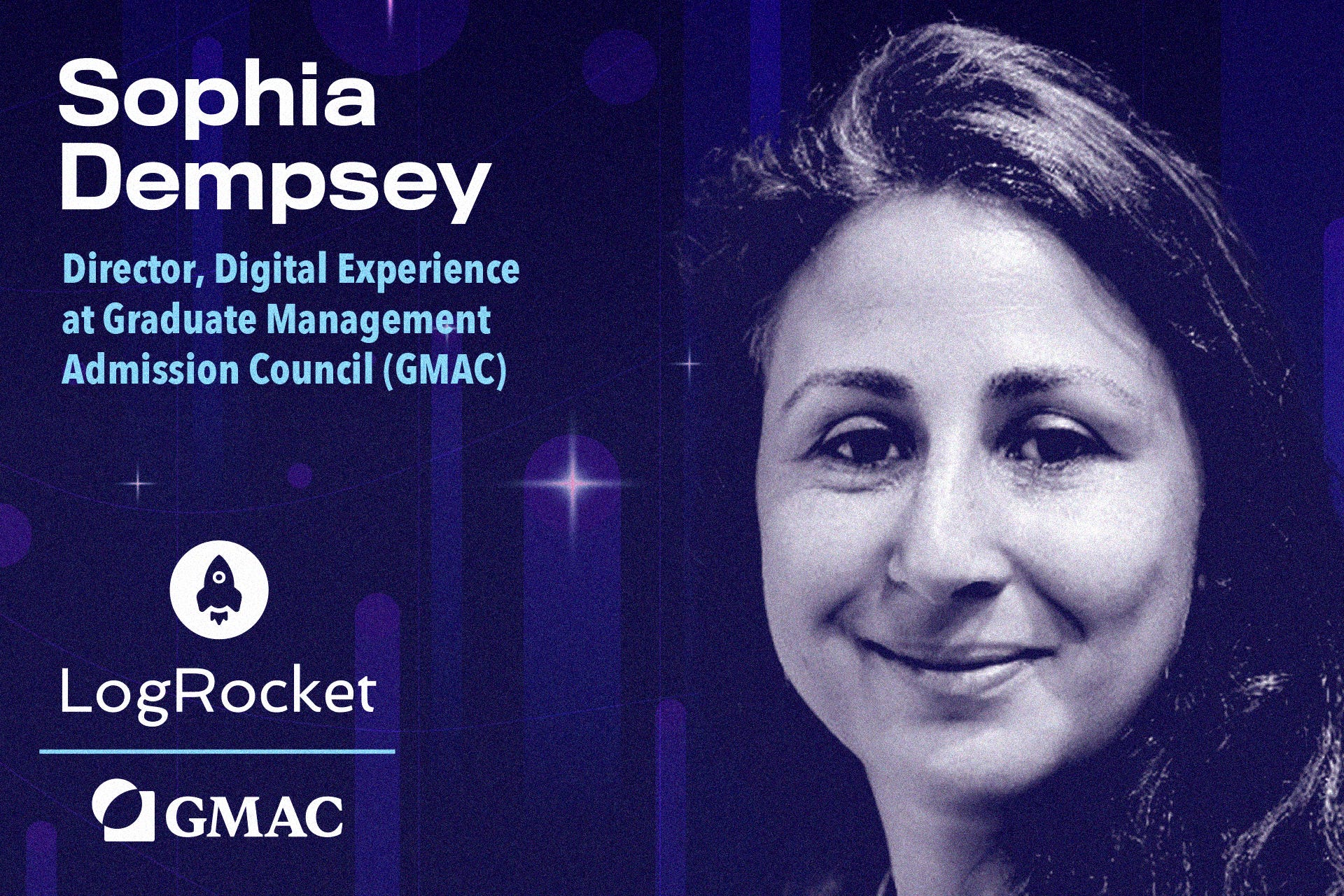
In this interview, Sophia reflects on starting transformation from the brand outward, balancing long-term strategy with quick wins, and meeting the expectations of Gen Z learners. She shares insights on building trust through design consistency, leveraging AI responsibly, and why successful transformation requires as much focus on people and storytelling as it does on technology.
Starting with brand, moving into digital
How do you define digital transformation within your product space?
It’s interesting because for us it started with experience transformation, and it’s been an organic journey. We wanted to change how GMAC shows up for current and future customers — B2C and B2B — because we saw opportunities to better meet evolving user expectations. The brand needed greater consistency — from our logo to our messaging, and that carried through into the product and digital experience.
As we worked on the brand, we realized many of the solutions required a full transformation of how our digital products were organized: registration, platforms, domain connections, user journeys, SSO. We couldn’t just put a new face on an old system. To deliver on the promise of a refreshed brand, the digital foundation itself had to change.
It became as much about technical transformation as experience transformation — the two became inextricably linked. That’s why our approach started from brand and experience rather than pure technology. It was probably the best route, because by focusing on what users needed, we built a more future-proof strategy instead of just tackling technology in isolation.
How have you balanced long-term transformation with short-term delivery?
I wish I could go back with what I know now, because we learned a lot early on — not in strategy, but in how we approached execution. You need tangible wins for the C-suite, the board, and your colleagues. People need to see that time, money, and budget are driving real change and ROI. At the same time, you can’t skip the foundational work, or you end up with surface-deep transformation that has to be redone.
We went heavy on the pillars — technical foundations, design foundations, atomic design, the right CMS, the right domain strategy. But we didn’t initially show the shorter-term wins. Now we run quick hypotheses and tests alongside deeper discovery work, so we can show both immediate results and long-term progress.
It took a while to get there. We’ve done a lot of business case management, board presentations, and sometimes the transformation probably sounded like something that might only happen in 10 years. I see now that we should have sprinkled in the quick wins from the start.
How did you approach collaboration with other teams during this brand transformation effort?
It was fully collaborative. I co-led the first six months with our brand strategy director, alongside a cross-functional team across marketing, product, and technology. We worked cross-functionally from the start and brought in a strategic agency to fill gaps in brand strategy and process. We’re a relatively small team and we supplemented with external expertise where needed.
It was always brand, experience, product, and technology working hand in hand. Over time it’s shifted — now content strategy is more central, with brand as a partner rather than the lead. The balance evolves depending on the stage of the work.
Building trust through transformation
How did you ensure trust and credibility were built into the new experience?
From the start, we focused on understanding customer problems and mapping journeys to identify friction points. That let us solve for real needs instead of designing from the inside out.
We explored how perceptions of GMAC aligned with where we wanted to go as a brand. GMAC has always delivered assessments and admissions services, but we also wanted to support learners and educators more broadly: career guidance, decision-making, and long-term growth.
As a mission-based, nonprofit organization with 70+ years of history, we wanted to show up as a trusted partner. That meant redesigning our logo, implementing an atomic design system for consistency across platforms, and ensuring clarity at every touchpoint. Every element was about signaling reliability, understanding user needs, and delivering solutions that built trust.
Do you consider the transformation complete, or still in progress?
We’re partway through a multi-year program. A big challenge has been multiple platforms, brands, and SSO processes creating confusion and impacting conversion. We’re in the process of consolidating our ecosystem under GMAC.com to create a unified experience.
By the end of Q1 2026, we’ll migrate a massive website — thousands of pages — into GMAC.com. After that, we’ll gradually bring all products, services, and domains into the same ecosystem. It’s years of work.
We’re in the early stages of scaling AI and personalization across our platforms, and we’re exploring chat experiences and personalized research tools. There’s significant scope to keep learning and iterating, and we’ll keep testing to learn what makes sense.
How do you measure whether those tests are on the right track?
We set clear focus goals each quarter to keep us aligned. For example, this year we’re concentrating on a few areas that drive value and get us closer to migration. We build roadmaps around those priorities and track hypotheses for each sprint to see what they return.
We use standard tools like Jira, Jira Discovery, and RICE prioritization. Everything is built against both the organizational strategy and the transformation strategy. Success is measured by engagement, conversion, or return metrics. If something technical doesn’t deliver those directly, it still needs to contribute to the larger program of work. Otherwise it’s pushed down the priority list.
We’re much better at this now than even a year ago. With time, you get sharper at keeping the train on the track and showing return.
Serving multiple audiences
How do you approach designing for B2C versus B2B audiences?
They are different cohorts with different needs, but they’re also connected. Business schools want what we want: a pipeline of people inspired to pursue business education. That’s why our first priority is the consumer-facing transformation — because it delivers directly to our B2B partners as well.
At the same time, we know we can’t transform everything at once. We’re a lean team, so we prioritized consumers first. On the business school side, we haven’t yet redesigned the website UX, but we’re ensuring reusability. With our atomic design system, DAM, and use of Figma, we’re building reusable components. If we design something for consumers — say a quiz or editorial component — we make sure it can also serve educators. That way every design investment counts for both audiences instead of duplicating work.
How do you approach designing for Gen Z, a digital-first generation?
I relish the challenge because they’re the harshest critics. But if you deliver for them, you deliver for everyone. A fast, mobile-friendly, accessible site benefits all users, just like accessibility features help everyone.
Our transformation was rooted in user needs and brand, so we focused on what matters to Gen Z: authenticity, trust, and seamless experiences. Those are universal values. They want the latest technology if it makes things easier, but what matters most is the human touch — knowing we care, showing sources, and delivering with transparency.
Before this transformation, I was involved in research programs on Gen Z and on careers, so I had already spent a year talking to different age groups about their needs. Gen Z were very clear: they want transparency, they want to know the “why” behind recommendations, and they expect brands to back up what they say with action.
The same themes kept coming up: convenience, clarity, and authenticity. That gave us confidence to focus on those priorities. We’ve also worked closely with content and editorial teams to ensure the experience resonates. Whether it’s content flow, search, or experimenting with chatbot technology, we’re baking in that human layer: who created this, why it matters, and why GMAC is the right guide.
Setting the bar with AI and personalization
Do ubiquitous products like Google and Amazon raise the bar for your design?
Everyone has a digital bar set by the products they use daily — Google, Amazon, Microsoft, Apple. That’s the level of polish and functionality they expect, whether or not it’s realistic for everyone.
We don’t try to replicate them wholesale, but we benchmark against them. For example, people expect seamless sign-on, clear navigation, and fast search. If we don’t meet that standard, users lose trust. So our job is to identify the features that matter most for our context and deliver them with consistency.
What’s fascinating is that this technology all moves so fast. We don’t want to jump on a specific solution if we aren’t sure about it, because we don’t have the investment or capacity to constantly change. So we need to be agnostic enough that we can keep tweaking around the edges.
How are you using AI to shape the GMAC experience?
We see potential for AI in our research content. We’re experimenting with AI-driven search so students can ask a question and get curated answers from trusted sources, rather than sifting through thousands of pages.
We’ve also tested AI chatbots for customer service. The key is transparency — users need to know they’re talking to a bot and be able to escalate to a human. AI should enhance the experience, not create friction or distrust.
What role does personalization play in your strategy?
Personalization is becoming central. We’re moving from a one-size-fits-all approach to tailoring experiences by segment, geography, and stage in the journey. You really need to understand the user and understand that quality and specificity are what keep people coming back.
We’ve started with A/B testing and simple personalization: content modules, targeted CTAs, dynamic landing pages. As we migrate everything into GMAC.com, personalization will scale. The end goal is an ecosystem where every interaction feels relevant and helpful, without being intrusive.
Lessons in leadership and transformation
What advice would you give to younger professionals entering product or digital transformation?
First, be clear on your “why.” Transformation takes years, and it’s not glamorous every day. You need to know what motivates you so you can stay the course when the work gets hard.
Second, embrace collaboration. The biggest wins come from cross-functional teams. You don’t need to know everything yourself — you need to bring the right people together.
Third, show outcomes early. Don’t wait until the grand vision is fully built to prove value. Quick wins build momentum and keep stakeholders engaged.
And finally, stay humble and curious. The field is evolving constantly. Whether it’s AI, personalization, or design systems, keep learning and stay open to new ways of working.
Looking back, what has been your biggest leadership lesson?
Transformation is as much about people as it is about technology. You can have the perfect roadmap, but if you don’t bring your organization with you, it won’t stick.
Early on, I was very focused on execution details before realizing how critical communication and storytelling are to bringing people with you. Over time I’ve learned that leadership is about painting the picture, then showing people their place in it.
It’s also about patience. These programs take years, and you have to keep reminding yourself and your team of the progress being made. Celebrate the wins, however small, because they add up.
What does LogRocket do?
LogRocket’s Galileo AI watches user sessions for you and surfaces the technical and usability issues holding back your web and mobile apps. Understand where your users are struggling by trying it for free at LogRocket.com.