

Renee Westmoreland is a senior UX and digital leader with more than 20 years of experience defining enterprise web strategy, digital transformation, and product direction. She most recently served as Senior Director of User Experience at Candid, where she helped unify multiple legacy SaaS platforms into Candid Search, a single destination used annually by millions of nonprofit professionals, foundations, and donors. Earlier in her career, she spent more than a decade leading web design and development at Foundation Center, later becoming Managing Director of Design & Marketing at Candid.
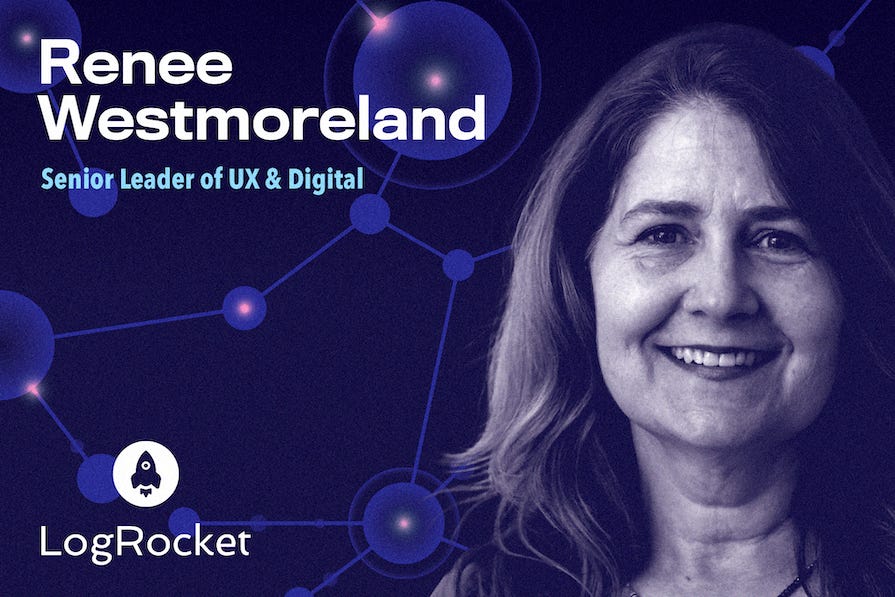
In this conversation, Renee talks about what it really takes to bring users along through major product transformation, from winning organizational buy-in before a redesign begins, to migrating tens of thousands of users off legacy platforms without losing their trust. She discusses how to decide which friction to remove and which to preserve, what she learned consolidating products after an organizational merger, and how AI is changing (and not changing) the fundamentals of good UX.
Aligning the organization around users
Bringing the organization along is often one of the hardest parts of transformation. How have you approached getting organizational alignment?
As technology advances, transformation is constant, particularly right now with AI. But I’ve also been through transformation caused by organizational changes, not just technology changes.
In terms of getting organizational alignment, taking time for discovery and input from users, in my experience, can be one of the most challenging things to convince internal stakeholders to accept. They generally agree in principle. It’s not that they ever say, “We don’t want to hear from our users.” They always say, “We want to hear from our users.” But then in practice, time schedules, wanting to ship faster, wanting to meet deadlines, revenue concerns, and that sort of thing will cause some people to bypass what we’re actually hearing from users.
I’ve found success by involving stakeholders from all different areas of the organization, because it doesn’t work if only product is on board with how we’re going to make this big change. Marketing also has to be on board. The engineering team has to be on board. You need to include stakeholders and make them aware of what users need in that transformation. Sometimes that means having them actually sit in on user interviews. And also share data, because hard evidence is difficult to ignore.
It’s challenging, though, because between the time schedules and the resource considerations, there are a lot of different factors going into how things need to happen. But it’s not going to be successful if you’re transforming into something that users aren’t going to want.
Discovery is a big piece of it, and I’ve found that’s where corners often get cut.
Migrating 80,000 users without losing them
You recently helped consolidate multiple legacy platforms into a single experience and migrate more than 80,000 users. What did that teach you about the difference between building a better product and getting people to adopt it?
Talking to users constantly throughout the discovery and the development process helps to identify and anticipate areas of potential friction. Even if the new product provides easier, faster ways for users to meet their goals, people have established habits in using digital products, especially things they have to use for their jobs.
We were working with professionals who were using our software to identify potential funders. Once they’ve established those habits, they’re not really keen to learn new methods. Even if the new methods make it easier, it’s like, “I go through these steps. That’s how I do my work.” So it’s really important to anticipate the friction points, eliminate them where possible, but also provide guidance where necessary.
We used tools like Appcues, a customer engagement tool that provides a variety of methods for customer guidance. For different features in the product, we would use different methodologies. Appcues would help us build multi-forked tours of the product. It could also provide really quick guidance around a particular feature, if we felt like that feature was valuable, but we need to give them a little bit of a handhold to get used to it. Like features that use AI — I had this experience with LinkedIn. They just deactivated their classic search and replaced it with an AI search that’s supposedly better, but all my microfilters are gone.
We experienced a lot of things that were similar to that. In addition to providing guidance within the product that’s right in front of the user, we created short videos around certain features: “Did you do this in the other product? Here’s how you do it in this product. Here’s how you achieve that thing.” They weren’t polished videos, they weren’t something that we would put on our website. But, when customers were reaching out to our customer support team, they could share the videos with them. It was a very quick and visual way for people to understand what the transformation was.
We had a variety of users, from the once-a-year user to the daily or weekly user. It was really those daily and weekly users we were most concerned about — a smaller group of the paid subscribers and the people who were consistent users of the product. When I did a revamp of another product, we offered customers a choice: Check out the new thing, but you can still go back to the old thing. At one point, we gave them the option to commit. By the time we reached the end of that transition period, we only had a small group of diehard stalwarts that we had to forcibly move over.
It’s a matter of really listening to the feedback — as people are moving over and telling you, “I can’t do this,” or “I’m having a problem here,” sometimes you have to go back and redevelop some of the pieces of it.
Deciding what friction to remove and what to preserve
During a major migration, some amount of friction can help users understand what’s changing and build confidence in the transition. How do you decide what friction to remove and what to preserve?
Friction can be caused by the removal or change of a feature that users deem essential. I find that the best way to identify those points and try to resolve them is by observing users in both the old product and the new product.
We would do a lot of sessions where we would give the users prompts and ask them to walk us through. They would be speaking aloud and talking us through. Then you would see immediately where they would get stuck and just freeze up and you would say, “Well, what are you thinking?” You don’t lead them to the next step; you just observe them using the product, because it could be that they’re just stopping to think. We had a data product, so it was a lot of information to process, but it could be that they got lost and the friction was inspectable.
Looking across the modernization initiatives you’ve led, what decisions had the biggest downstream impact on customer experience?
Staying on top of the changing levels of technological literacy of our customers. As technology advances, users have expectations and an understanding of products that function well and that give them confidence in the product. For example, e-commerce flows have evolved really significantly over time, and a poor e-commerce flow can be a dealstopper. It could work fine, but if it doesn’t feel polished and elegant and inspire confidence in the user, nobody wants to put their credit card into something that looks janky.
But the biggest decisions were those where user feedback and data were ignored. Those have the biggest downstream impact. I went through some of that — where UX recommendations got overridden or overruled.
Oftentimes it’s done, almost always, in the interest of time savings or rush to market. And it ends up being costly: I’ve experienced situations where parts of a product had to be rebuilt. That’s why having top leadership agree to take in all that user feedback is really critical. There are just times where everyone feels like they’re making the right decision, but forcing through expedient solutions that end up being problematic has a huge impact on customer experience.
Building feedback loops that keep transformation honest
You’ve led designers, researchers, engineers, and product teams. What operating models have you found most effective for turning customer insights into product decisions?
Face-to-face contact with users, observing how they use the product and understanding their relationship to technology — not just how they used your piece of technology, but technology in general.
In terms of development, there are a lot of different models. Over my past career, I’ve worked with everything from waterfall to agile to scaled agile to product operating model. From my perspective, a true agile development process is the best for continually integrating user feedback throughout the development cycle because there are multiple points where you can inject the user feedback into revisions of the product or additions to features.
With other product development models, it’s very hard. We followed scaled agile for a while, which is really closer to waterfall, and it was really hard because once you got the feedback, it would take months to get the report as opposed to weeks. Being able to have that cycle continually, that continuous development and user feedback going through, helps to make sure that’s taken into consideration.
Is post-launch feedback the same face-to-face approach, or does it look different?
Yes, but a lot of really critical initial feedback comes from the customer support team. If it’s a situation where people are reaching out to support, we need to tackle it and address it urgently.
You can’t just put something out in the world and then leave it alone. We continually observe user patterns using automated tools that do recordings of usage and show where their cursor is moving on the screen. When new features are released, I like to do spot mini surveys around a new feature. Just one or two questions, like: “Is this working for you? Did you have trouble with it?” We’d get a decent amount of feedback from NPS, which we’d use to gauge the overall tenor of customer satisfaction.
Merging two products into one
Following the merger of two established organizations, you helped create a unified product experience. How did you decide what to keep, what to retire, and what to reinvent?
We identified our critical customer personas and their needs. We looked at the usage data of features in the legacy products to determine which features were absolutely essential to replicate. We spoke to users about what could be improved from the old products.
You have to take all of that information in — What are they using? How are they using it? What are the problems that they have to solve? But, you still have to go at it as a completely new product that you’re building from the ground up, because it’s too easy to get mired in the way things were previously coded. Especially with technology moving as fast as it is, you need to be freed up to take all of that information, decide what you’re going to build, but don’t try to replicate. Build it in the most modern way possible.
We did make a list, kind of like a big chart: “Here are all the critical features from this product, here are all the critical features from this product, and here’s how you do it in the new product.” That was mainly for educating our own teams.
Did you end up compromising on some features?
We did, certainly. Trying to replicate some of what was there before slowed us down. I feel like some of the compromises didn’t work out. Anytime you build something new and the customers, as they’re getting used to it, have an opportunity to try it out, they’ll tell you, “I need to do this and I can’t do it.” Sometimes you have to say, “OK, we actually have to move fast and build a way for them to do this.”
There were many, many compromises. The compromises came from any number of corners of the organization — some from users, some from customer support, some from marketing, some from engineering.
What AI changes — and what leadership must get right
AI has made it dramatically easier for people outside of design to generate interfaces, content, and workflows. Are the core principles of UX changing?
I don’t think the core principles are changing. With AI, some people might choose to ignore them, but that can result in some sloppy stuff. But, AI makes it a lot easier to do rapid prototyping and put solutions in front of users faster and more frequently.
Working in nonprofit technology where resources are limited, prototyping was always a challenge before AI because oftentimes it required engineering resources. I’m a big fan of paper prototyping, and everybody makes it sound really easy, and it’s not. The fact that you can use AI and build a prototype that feels like people could get their hands on it — that’s going to really help, if people use it to actually get more user feedback.
Are there parts of the design process that need to remain with humans?
I think so. My designers loved using AI. But I don’t think it’s so different from using AI to write a first draft, using AI as almost like a scratch pad to play around with a lot of ideas quickly as opposed to building them yourself. A human needs to apply their aesthetic — AI doesn’t have an aesthetic, and that is subjective. There are some people who are very talented in that area and people who aren’t, and we still need those very talented people who see something that nobody else sees.
I think it can be a launchpad. If somebody needs a simple website and AI can build it for them and they don’t need to worry about brand or any of that, have at it. But there are a lot of small things that only a human can really pay attention to in terms of detail. And those details, I strongly believe, impact usability.
If you joined a product organization tomorrow to start a new modernization effort, what’s the first thing you’d assess?
The organization’s top leadership has to have high interest in truly understanding the problems that they’re trying to solve for their customers. User-centered product design and development has to be supported from the very top of the organization to be successful. If I were joining a new organization, I would want to know that human-centered design was a priority for the leadership all the way up to the CEO.
What does LogRocket do?
LogRocket’s Galileo AI watches user sessions for you and surfaces the technical and usability issues holding back your web and mobile apps. Understand where your users are struggling by trying it for free at LogRocket.com.