

Lucila Levit is Global Head of Customer Experience at Humand, where she leads end-to-end customer strategy across multiple regions. Over the past four years, she has built and scaled onboarding and customer success teams internationally, growing a multicultural CX organization spanning 14 countries. With a background in industrial engineering and training in data science, she focuses on customer discovery, operational alignment, and global team building.
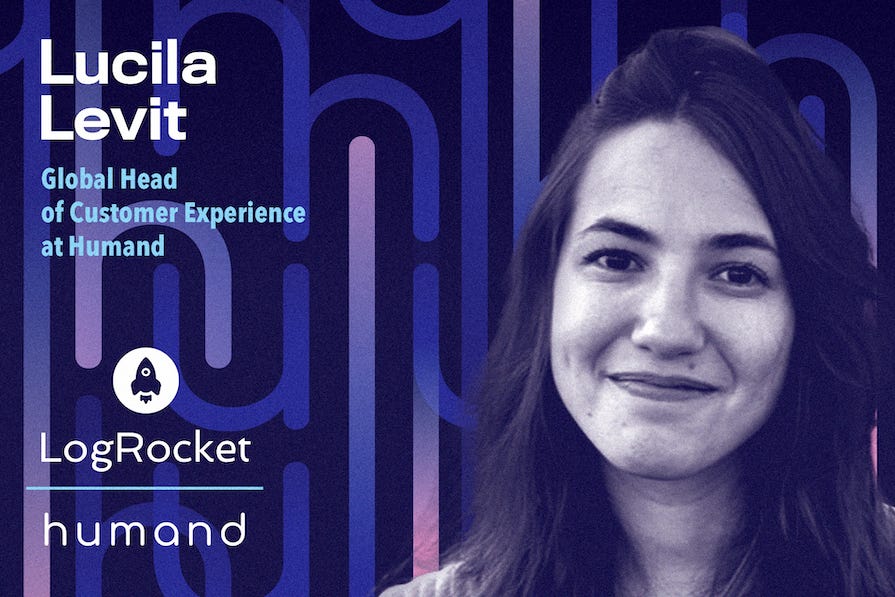
In this conversation, Lucila discusses how cultural nuance shapes customer experience design, why discovery must start with frontline employees, and what it takes to scale a global CX team while maintaining shared values across regions.
Building hyper-localized CX in a global market
Could you start by describing your core customer base?
We work with organizations across multiple industries and regions, with a strong focus on companies that have large deskless workforces such as manufacturing, retail, and logistics. Our customers typically operate in complex environments where communication, adoption, and operational alignment are critical to success.
What makes our customer base unique is not only its geographic diversity, but also its wide range of digital maturity levels. That diversity shapes how we design adoption strategies, onboarding journeys, and long-term engagement models. Our users are really different. We don’t only work with people who work from home or from an office with a computer — we have a variety of users, and that’s something interesting.
How do you adjust the CX journey across regions?
We don’t adapt the journey only by country. We tailor it to cultural context, industry dynamics, and user behavior. We consider high-level factors such as digital maturity and small operational details that shape adoption, like device preferences.
In Latin America, customers tend to value close guidance and hands-on support. So we emphasize proximity, clarity, and continuous support.
In the US, it’s different. We prioritize asynchronous preparation. We share materials before meetings, and during meetings we focus more on strategic discussions such as benchmarks and change management rather than configuration details.
In Europe, security and compliance conversations often need to happen first. At the beginning of onboarding, we talk a lot about security and compliance before moving to other topics. That helps customers feel more comfortable and aligned from the start.
In parts of Asia, executive teams are deeply involved at the beginning. We start with conversations with leadership to get aligned on the company’s main goals before moving forward.
In practice, we continuously adapt each stage of the journey and every type of interaction to what works best in each region — even communication channels like WhatsApp or email can vary.
Designing for real users, not assumptions
How does “customer delight” look in an HR ecosystem?
Customer delight comes from deeply listening and solving real problems. We talk a lot about generating value. It’s not about sharing good news — it’s about finding solutions.
Sometimes that means helping customers beyond the platform itself, such as connecting them with peers in the same industry or sharing relevant ideas.
One practice we have is that every week, each member of the customer experience team blocks the first hour to answer one question: What else could make this customer’s experience better? It’s a moment to stop and think intentionally about how to improve the relationship.
In practice, delight shows up through transparency and fast communication. Customers feel supported when they understand the status of their projects. Over time, that builds trust. Adoption grows naturally, and retention becomes part of the dynamic of the relationship.
How do you conduct discovery to ensure you’re solving for employees’ reality rather than HR assumptions?
We have two stages in our discovery process.
First, we do user persona discovery. At this stage, we focus on employees — not HR goals. We map workforce realities: which devices they use, their digital literacy, their environment, and their daily routines. We want to understand who the users are before talking about processes.
Then we move to process discovery. We learn about workflows, communication flows, operational challenges, and how the company actually works. But we do this after understanding who is using those processes.
Whenever possible, we complement this with on-site visits and direct conversations with employees. Observing how people actually work — their context, constraints, and habits — often reveals insights that wouldn’t surface otherwise.
A key part of discovery is validating assumptions early. When you understand the context before starting configuration, you make better decisions.
Have you learned anything surprising during discovery?
One example that stayed with me was a large healthcare organization in Argentina. HR leaders were initially concerned that employees wouldn’t engage with a social-style platform because they might feel observed or uncomfortable sharing.
The week we launched, we saw more than 10,000 active users, and many activated their accounts on the first day. During the first week, there were more than 1,000 posts from teams sharing moments from their workplace. It was completely different from what we expected.
Six months later, during a visit, I spoke with a nurse who told me, “I really feel like my voice is part of the organization now.” Before, recognition was private. Now, acknowledgement was visible to everyone. That showed me how meaningful public recognition can be.
How do qualitative insights translate into concrete product decisions?
Qualitative discovery influences rollout decisions.
In one mining company operating in Mexico and the US, leadership wanted to implement 15 modules in the first month. During discovery, employees shared that too much change at once had created problems in the past.
We recommended a gradual rollout instead. Communication features were introduced first. Three weeks later, time-off tools were added. Later, service modules were introduced.
The onboarding took a little longer, but engagement was stronger in the long term. Sometimes moving more gradually at the beginning creates better outcomes.
Scaling personalization without losing nuance
Are you seeing a global mobile-first movement?
In many markets, it’s not just mobile-first — it’s mobile-only. Some workforces don’t regularly use computers. Their main interaction with technology is through a smartphone.
For these users, the experience needs to be simple from the beginning. We often start with basic functionality and introduce additional features gradually.
Mobile environments also bring advantages like push notifications and accessibility. But the key is designing around how people actually work, not how we assume they work.
Hyper-personalization can be difficult to scale. What frameworks help make it repeatable?
To make personalization repeatable, hiring standards are important. Teams need to understand context and make good decisions.
We also rely on modular playbooks and automated feedback loops like CSAT surveys and metric alerts. If engagement drops unexpectedly, we investigate quickly.
Automation handles the baseline monitoring, which allows the team to focus on more personalized guidance when it’s needed.
Building a global CX organization
How do you keep a 100-person global team aligned?
Retention is our North Star metric. We talk about it constantly, and we repeat the goal of zero churn.
But alignment is not only about metrics. Customer obsession is a company-wide value. We reinforce this through rituals such as monthly learning reviews, where we discuss what worked and what didn’t.
When a customer leaves, we conduct postmortems to understand what happened and define actions. If we don’t change something after a churn, that’s a red flag.
Repetition, shared language, and regular reviews help keep distributed teams aligned.
What communication practices support this alignment?
We hold weekly customer experience meetings and rotate training times across regions so no single team is always inconvenienced. Sessions are recorded so everyone can access them.
The expectation is continuous learning. If someone ends a month without learning something new, that would be a concern.
What are the advantages of local teams serving local customers instead of centralizing support?
Having local teams allows closer relationships and deeper understanding of cultural differences.
Small behaviors — greeting norms, tone in meetings, communication style — can influence trust. When working in new regions, local feedback helps teams adapt more quickly.
Local presence also shortens the learning curve in new markets and allows teams to anticipate challenges earlier.
What lessons have you learned about building a global team?
One of the biggest lessons has been the importance of understanding a country’s culture and market dynamics before hiring.
Scaling globally doesn’t mean replicating a single model everywhere. It means building consistency through shared values while allowing local adaptation.
Hiring people who align with those values is critical. The right people help you understand the market faster and grow in a sustainable way.
What does LogRocket do?
LogRocket’s Galileo AI watches user sessions for you and surfaces the technical and usability issues holding back your web and mobile apps. Understand where your users are struggling by trying it for free at LogRocket.com.