

Joshua Karp is a consumer product leader with more than 20 years of experience across streaming, subscriptions, ecommerce, and digital communities, including serving as VP of Product at Paramount. He began his career as a product manager at Myspace, where he launched and scaled multiple consumer products and content verticals. He later held product leadership roles at Sole Society, part of Nordstrom, and WWE.
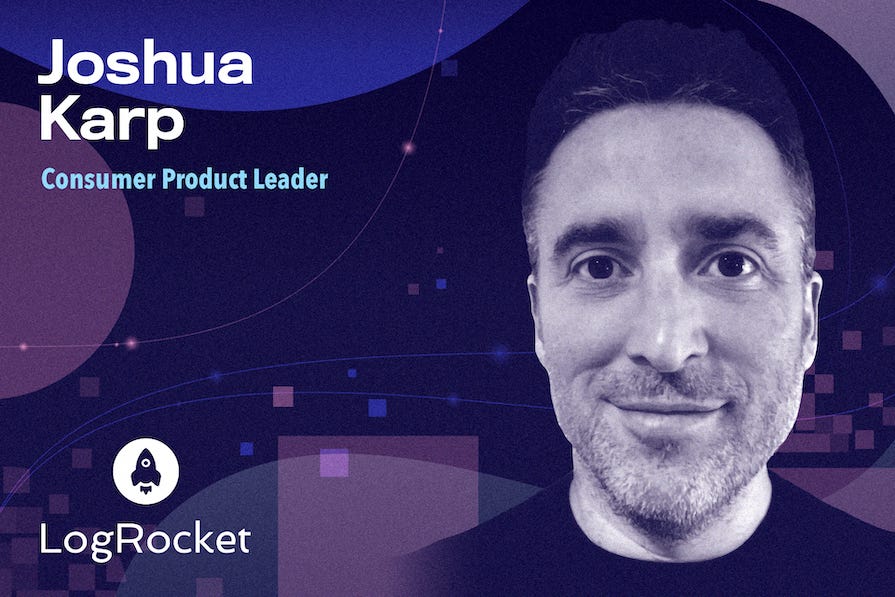
In our conversation, Josh explains why sustainable subscription growth depends on balancing acquisition with engagement, retention, and long-term customer value. He explains why identity, monetization, and discovery are the building blocks of products customers continue to value, and why the strongest subscription brands will extend beyond digital experiences to build lasting customer communities.
Building subscription growth through customer value
You’ve spent much of your career building consumer products across different industries. Thinking back on those experiences, what have you found to be the biggest misconceptions product teams have about sustainable subscription growth?
A big misconception is that sustainable growth primarily comes from acquiring new customers, and to be honest, I’ve been guilty of that myself. Subscriber growth is obviously visible and incredibly important, so it’s easy for teams to focus heavily on that.
Over time, I’ve realized that sustainable growth comes from consistently delivering enough value to keep your customers coming back. Your existing customers are incredibly valuable, not just because they’re already paying, but because they validate your product and often become your strongest advocates. They might go out through word of mouth, social media, or elsewhere and explain why someone else should become a customer.
It’s important to balance acquisition with engagement, retention, and habit formation. Otherwise, it’s like a leaky bucket — you’re bringing people into something that’s not sustainable. The goal shouldn’t just be to grow subscriptions, but to build an experience that people continue to value and ultimately want to recommend to others.
When you’re thinking about the whole customer lifecycle — acquisition, onboarding, engagement, retention, and monetization — are there certain things a team can’t overinvest in?
Yes. Some things are so critical that you don’t want to underinvest in — mainly identity and monetization. Certain parts of a product feel more visible, such as the video experience, content merchandising, or, in ecommerce, product detail pages and recommendations. Those things matter, but they’re only effective if you understand the customer: who they are and how they move through your business.
You need to know where they sign up, how they pay, whether they use promotions, which platforms they use, when they engage, when they leave, and how you can win them back.
One team that needs a seat at the table in virtually every discussion is the monetization and identity team. Without that foundation, you can’t personalize experiences, build a lifecycle marketing strategy, or make smart product decisions. It may not have the sizzle, but it’s definitely the steak of the operation. It’s the critical piece that allows everything else to run effectively.
Are there areas that consistently provide a higher return on investment, or does it depend on the business?
I think it depends. In a pure ecommerce business where you’re buying products, some parts of the experience might be more critical than others; similarly, in entertainment and streaming. One piece that’s equally critical in both is discovery, especially for new customers.
In ecommerce, someone comes to your site, and maybe they don’t land on the right product page, or they don’t like what they see. You want to make sure they can discover something else. If they’re looking for something specific, your merchandising and search need to help them find it.
The same applies in streaming. You want customers to find what they’re looking for and get value quickly. Even though subscribers are already paying, you’re still trying to earn that subscriber beyond the current billing period. If they can’t find something they want, you’ve lost them. Discovery is equally critical in both businesses because it helps customers realize value immediately.
Turning engagement into long-term retention
Most streaming services have enormous content libraries. Is there a customer signal that indicates long-term engagement?
A couple of signals stand out to me. One is the number of different series someone watches. There will always be people who subscribe to binge-watch one show and then leave. The real opportunity is getting someone to discover something else they’ll enjoy, even if they weren’t looking for it.
That’s where recommendations and personalization become so important. If that second show is something they didn’t even know about, you’re creating additional value beyond what they originally came for. This does two things. It creates more value in the moment and, over time, builds trust in your recommendation system. If customers consistently enjoy what you recommend, they’re more likely to trust future recommendations. Ideally, that helps retain them longer.
Another important signal is engagement within a household. If multiple people are using the service, especially with different profiles, watchlists, and favorites, the subscription becomes more valuable. It’s less likely they’ll churn because more than one person has a stake in keeping the service.
The broader context of consumption — what people watch, when they watch, and where they watch — helps you personalize the experience and continue to help customers find value.
You’ve worked in both ecommerce and subscription streaming. Do customer expectations differ when people are buying products vs. entertainment?
At a high level, they’re similar. You want someone to arrive, find something relevant as quickly as possible, and take the next step, whether that’s making a purchase or starting a stream.
The difference is that ecommerce extends well beyond the digital experience. There’s packaging, shipping, delivery communication, returns, customer service, and product reviews. Those things determine whether someone buys and whether they come back. Shopping is also very emotional. The experience needs to create excitement during the purchase and reinforce it when the package arrives. It’s one cohesive experience online and offline.
With streaming, it’s between you and the service. The customer is already paying, so the challenge is making sure it’s easy to find something that fits their mood and interests and continues to feel worth the price. Ecommerce has to deliver both a great digital experience and a great physical one. Streaming has to keep earning the subscription every time someone opens the app.
Customers don’t differentiate between the website and the box that arrives at their house. They don’t think, “The site experience was great, so I’m happy,” if everything else disappoints them. They think about the entire brand experience from beginning to end. That’s something I’ve learned over time, and it’s why organizations need to consider every customer touchpoint.
AI, prioritization, and outcome-driven product management
AI has made it much faster to synthesize data, identify patterns, and generate insights. Has that changed the way your teams build or prioritize what to build?
At a high level, AI enables product teams to get to the starting line much faster. It can quickly synthesize customer feedback, identify patterns in product and behavioral data, test early hypotheses, and prototype ideas. Instead of debating an abstract concept, teams can sit in a room and look at something tangible. It’s imperfect, but it makes the discovery process more efficient and helps teams make stronger prioritization decisions with fewer cycles of analysis and discussion.
Ultimately, AI provides another layer of context. It’s not the decision-maker. It can surface useful insights, but it doesn’t understand the full context around the customer, the business, technical resources, or how the organization works. That’s why you still need human judgment to decide what matters and what to build.
Is there an example where you’ve seen AI change the customer experience rather than just improve internal efficiency?
Personally, I’ve been building with AI on the side, and one of the biggest opportunities I’ve found is how it can make personalization feel more useful and contextual. Instead of simply presenting recommendations, AI can explain why something is being recommended based on onboarding signals, how someone is using the product, or other context behind the scenes.
That additional layer helps people understand why something is relevant to them rather than just seeing “This is recommended for you.” It creates a more responsive, personalized experience.
We’re just scratching the surface. The more human context a product can provide, the better AI can make recommendations that feel relevant rather than generic.
You’ve talked about moving organizations from idea-driven roadmaps to outcome-driven execution. As AI shortens planning and delivery cycles, does that change how you prioritize?
I think it has to. As planning and delivery cycles shorten, teams receive customer signals and results faster. That makes it even more important to prioritize outcomes over features. That doesn’t mean I don’t believe in a long-term roadmap — you absolutely need one. But the roadmap needs to be more flexible than ever, and teams need to be willing to change course when the data shows there’s a different problem or another opportunity that matters more.
The starting point should always be the customer problem, not a solution. AI can help identify problems, test ideas, and accelerate learning, but product teams need to become more comfortable being uncomfortable. The discipline is staying anchored to the outcome while being flexible about the path.
Are there decisions that become harder as execution becomes easier?
One of the biggest things product managers need to become comfortable with is saying no. There will never be a shortage of stakeholders bringing ideas to the product team. One of the biggest muscles you have to develop is knowing when to say, “Let’s hold on this. We want to understand it better.”
As AI accelerates development, that becomes even more important. People will naturally ask, “If it’s so fast to build, what’s the harm? We can ship something and learn.” The ability to pause, be thoughtful, and know when not to build something — even when speed is there — will become increasingly valuable.
Building brands customers want to belong to
Looking ahead, what competitive advantage will help subscription businesses continue to grow?
I think the biggest advantage is still delivering an exceptional customer experience. A lot of that will happen within the digital product itself — creating an intuitive experience that’s personalized and consistently delivers value. But I also think there’s a big opportunity to go beyond the product and create real-world experiences.
You don’t want customers to feel connected only to a show or a product. You want them to feel emotionally connected to the brand and what it represents in their lives. Real-world experiences bring affinity groups together. They create shared memories, build stronger communities, and give customers another reason to feel invested in the brand.
Fanatics Fest is a great example. Fanatics could have remained a traditional ecommerce business, but instead it expanded into a much broader fan experience. It brings together athletes, collectors, and communities, elevating the brand beyond a point of purchase into an experience of its own.
The companies that win will be the ones that create an exceptional product experience and then find meaningful ways to build connection around it, both online and offline.
What does LogRocket do?
LogRocket’s Galileo AI watches user sessions for you and surfaces the technical and usability issues holding back your web and mobile apps. Understand where your users are struggling by trying it for free at LogRocket.com.