

Hugh Theodore is Senior Director of Product Management at Dayforce, a global leader in HCM technology. Hugh focuses on the company’s tax and payments organization. Since joining Dayforce in 2021, he has also served as Director, Product Readiness and as Senior Director, Product Operations. Prior to Dayforce, Hugh held product leadership roles at Sensibill, Yuhu, and Symbility Intersect. Earlier, he worked in implementation and consulting at mindSCOPE Staffing Software and Konrad Group.
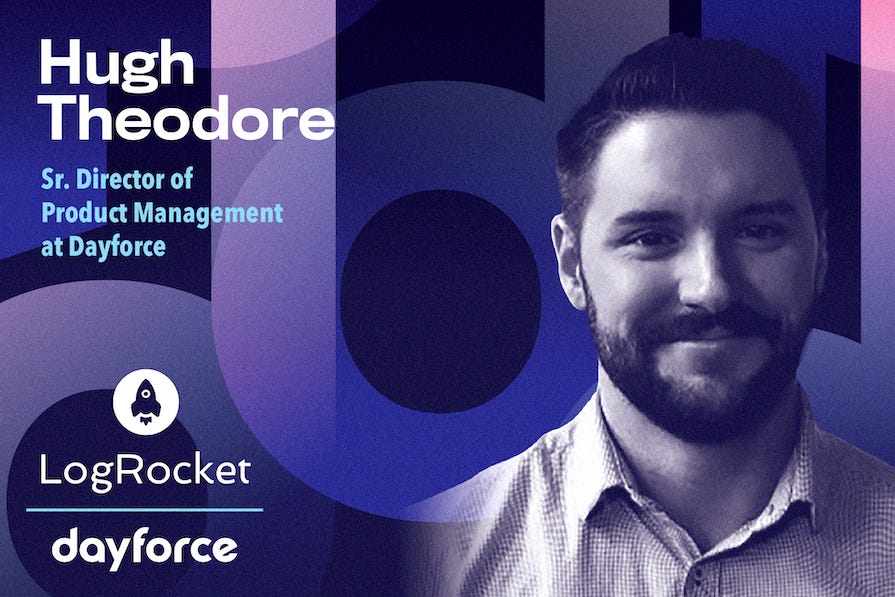
In our conversation, Hugh shares the principles he’s found to hold true across every large-scale transformation. He discusses why real transformation is always cross-functional and how the narrative around it needs constant advocacy. He offers insights on how to plan for turnover with an AI-powered knowledge base, the qualitative and quantitative signals that a multiyear program is on track, and how to tell when an external force like AI warrants a pivot. He also explains why the best transformation leaders aim to work themselves out of a job.
What holds true across every transformation?
Large-scale transformations can be driven by very different forces, including changes in the market, customer expectations, business models, technology, or company strategy. Across the transformations you’ve been part of, what principles have you found to be consistently true regardless of what’s driving the change?
I think one of the axioms of transformation that rings most relevant is that they always need to be cross-functional. Usually, if you’re doing something very siloed, it’s not truly transformational. With that in mind, establishing the processes and working groups that extend not just beyond just your normal span of control but also your span of visibility is really important.
Ignoring those exogenous forces that you mentioned, the one universal truth I’ve found is that transformations are usually the result of something being ignored for a period of time. Maybe that’s tech debt or performance and scale needs, as you increase your customer base and move up the customer segment ladder toward large enterprise. Something that has been ignored will require deep investment into transforming your product, your infrastructure, maybe even your business model.
I like to think of it like a house. I live in a house, and I love the neighborhood. I like my neighbors. Maybe there are good schools, shops close by. I have a fit with this house, and this is analogous to product-market fit. Something clearly works, but as I grow and my family grows, our needs change, and that requires investment to meet our needs. If I want to continue to thrive, a renovation or a transformation would be needed.
One other truth that I’ve found is that transformations usually take place over a long period of time and can get political. The longer a project goes on, the more the opportunity exists for new, external inputs. When there are a lot of opinions or when a project gets political, there is a lot of opportunity for deviation from the original plan. So, it’s helpful to make sure at the outset you have incredibly clear goals and exit criteria — what the definition of transformed looks like. Without that, the goalposts can move an infinite number of times. And especially in very compliance-heavy areas, there are certain things that just must remain true.
Another thing that must absolutely be true at all times is that you have to be super sharp on your financials. Transformations are a capital-intensive investment that don’t often see the operational expense improvements for years potentially. Make sure you’re regularly, and very visibly, demonstrating adherence to the economics of your plan.
Where do organizations tend to overcomplicate a transformation?
That can happen when there’s a lack of clarity or a lack of alignment on what the North Stars or critical outcomes are. For example, how do you best demonstrate value on a transformation iteratively, and what does that value mean? Does it mean value into production right now? And, if so, across what metrics? Or does it mean the speed at which we’re able to deliver the end state of the transformation?
In this example, confusion or complexity arises because both outcomes are important, but you can’t satisfy both efficiently. So, you need to decide what’s the most important thing and advocate for that in a compelling way. You also need to factor in all of the different variables that might be going on in the background in terms of the size and stage of your company. Are you seeking funding? Are you publicly traded?
It goes back to having clear alignment of what the ideal end state is and the milestones along the way, and being really clear on the absolute basics. Between scope, time, and cost, you get two. What are the most important two at any given time? It’s OK if they change, but be realistic about the impacts of those changes, and the compounding effects of constant change.
Owning the narrative
Getting people on board depends heavily on communication. How do you build a narrative that helps people understand not just what’s changing, but what it means for them?
To avoid things getting contentious, constant, ongoing advocacy is really important. There’s the quote, “Nature abhors a vacuum.” If you don’t have a really strong narrative, someone else will fill that space with their own narrative, and then you’re rolling the dice. That’s when that complexity or confusion can arise.
When it comes to building a narrative that is compelling to users or to stakeholders, customers, whoever, the key thing there is not what you’re building, but why you’re building it. I tell my team that the messaging we give is the “so what?”, not the “what” — it’s about what it means to the user.
You build your business case for transformation all around metrics, but every metric has to be grounded in pain — pain for the business, pain for the user, pain related to compliance, whatever it may be. And that pain has an emotional resonance with your stakeholders. When you start with the pain rather than with what you’ve built, you communicate how it affects a human being, that lands so much more. That actually gets people’s attention because we are, by our own nature, averse to pain.
A really talented past leader of mine laid it out very clearly. Our organization is very compliance-heavy. We speak a lot of inside baseball, and we don’t realize that we’re doing it because it’s the language that we speak every day. You see this whenever you join a meeting, and there’s a lot of acronyms getting thrown around. They said flat out, “There’s too much inside baseball. You have to go with outside-in rather than inside-out communication.”
This goes back to how to build a compelling narrative: outside-in communication starts with the user, what they feel, and what matters to them.
Given that transformation can have a long timeframe, how do you ensure messaging remains reinforced?
Clear and compelling messaging is critical. Constant and ongoing advocacy is key for the success of your program. If you’ve got a year-long transformation, congratulations. You might have found a simple problem that requires a simple solution.
But with any multi-year transformations, the longer it goes on, the more effort you have to put into the internal product marketing, and the internal advocacy. You have to keep communicating why it matters and keep people glued to the original strategic outcomes — assuming they’re still relevant — in new, different, and novel ways. You’ll have executive attention for maybe three to six months. And then at the outset of the new year, you’ll be fighting for further investment in your program. So, you have to find new and different ways to continue to sell the idea of what you originally set out to do.
You mentioned that longer transformations also tend to become more political. How do you prevent executive attention from waning?
It’s a matter of reiterating and making it clear that the program, as originally set out, still meets the moment. And if it doesn’t, then you have to be very transparent about that as well. You should not get stuck in a sunk-cost fallacy.
A good example is the transformation that I’m working on right now. We started it just prior to 2025, before ChatGPT, Anthropic, Gemini became ubiquitous across the enterprise layer. Since then, our processes and strategy has had to pivot to account for that, and we were fortunate that the approach that we were taking ladders perfectly into agentic experiences and a future that is what we would consider AI native, not just AI adjacent.
But the narrative has had to evolve along with that to keep people excited about it and to build confidence that continued investment in this program will yield better outcomes for the business long-term than any other initiative.
Planning for turnover
A transformation that lasts many years may not end with the team it started with. How do you keep the messaging consistent as new people join, and how do you make space for their new ideas?
You will never have a shortage of new ideas and judgements on your old idea and decisions.
When you’re new at an organization, you have this sort of fresh-eyes approach on things, and you say, “Why do we do this this way? And why is that that way?” And then after you’re at a large organization for any period of time, you start to see how decisions are made, and the corners that you can get put into. You start to be a little less judgmental about past decisions and a little bit more solution-oriented toward the future. That being said, keep your fresh eyes perspective as long as you can after joining a new company, it’s valuable, and one of the reasons why you were hired.
But to your question on turnover, that’s unavoidable. If you’re at any organization working on a transformation program for two to four years, you’re going to experience turnover.
Wherever I go I like to create an internal knowledge base. Claude and ChatGPT agents have made this much easier. The knowledge base is something that we can put all of our documentation into. This repository links out to that information, so anyone at the company can ask any question. That’s been incredibly helpful, especially for ops, support, and product to avoid asymmetrical information. We operate in a highly complex, very deep space. The concentration of highly tenured domain experience in itself is a risk, not just to a transformation, but to a business. If information is only in people’s heads, you have to put it somewhere that is centralized. That’s the whole point of building something that is AI-native. It enables everyone, everyone becomes an expert.
We’ve found our knowledge base and other agents can aid in answering general inquiries and can also speed up onboarding. It can be a really helpful tool for giving newly onboarded employees with those really good ideas an understanding of the decisions and risks that have occurred on the program beforehand. That gives them context as to why an idea that they’re forming in their head with those fresh eyes may or may not be the right approach, without dissuading them from suggesting it.
One factor that’s really important in mitigating turnover during transformation is having strong executive-level champions. If you have any influence over who the sponsor of your program is, make sure it’s someone that really believes in not just what you’re doing but the way that you’re doing it. Ideally, they have the influence to keep the executives interested, aligned, in the same boat in terms of how the team is going to achieve this long-term transformation.
Staying on course
What indicators, qualitative or quantitative, tell you a transformation is on track, especially when the end goal may be several years away?
If you’re building iteratively and not in some sort of big-bang delivery methodology, it’s really helpful to have a leading indicator or lagging indicator. Like, how is user acceptance testing (UAT) going? We have our Customer Zero partners in the business performing UAT with us. So, ask: how are the vibes on UAT going? Is everybody feeling really good about the outcomes there? Is it matching their expectation of what our prototypes promised?
In terms of early quantitative indicators, I look toward delivery velocity. Are we at least on track from a delivery velocity perspective? Are we tracking toward the timeline?
Beyond that, are we balancing the right level of discovery and research in line with the delivery that needs to happen? For any long-term transformation program, you almost certainly have to take a dual-track agile approach. Delivery is important. We have to hit our timeline, but are we also able to chunk through the discovery, research, and early customer validation to turn that into deliverable requirements that are constantly validating that we’re building the right thing for our customers.
That is a little bit harder to measure. What does good discovery look like? What does good research look like? So, I would look to see how quickly we can put a prototype together and put it in front of the business or customers and say, “For this epic, for this feature or this experience, this is what we’re envisioning. These are the pain points that we want to hit.” How quickly can we get that validated to really move the needle faster on discovery and idea validation? Those are historically slower areas of the product development life cycle.
You mentioned that the strategy of your current transformation had to pivot as AI tools spread across the enterprise. How do you know when an external force is significant enough to warrant a pivot?
This is a completely different answer today than it would have been a few years ago. I think that anybody who started a long-horizon transformation program in ‘24 or ‘25 is likely pivoting to make sure that everything revolves around how AI incorporates into it, for better or worse. Not every company needs to consider AI, and not every company should, but every company is, just based on what I’ve seen in the market.
When is a pivot necessary? When the original outcomes or methods are no longer relevant to the moment. What sort of universal truths existed in the business plan and operating model, based around what metrics and what user pain? Do those still make sense?
Also, a pivot is necessary when leadership tells you that it’s necessary or when you tell leadership that it’s necessary. And I would bring this back to: If you let a gap in the narrative exist, someone will fill that for you. So, if you notice something within the market that materially impacts the approach that you would take or the outcomes of your transformation program, start crafting a new narrative, or at least start understanding how that impacts your outcomes. Are your metrics still relevant?
To use a hockey analogy: Are you skating to where the puck is going?
Culture, scale, and the pace of change
How do corporate culture and company size shape a transformation?
The two are inextricably linked. You can have a really strong culture at an enterprise, but there’s going to be dilution the larger the organization gets. If your culture is all about accountability and agency, well, at a 10,000-person company, that simply can’t exist everywhere due to hierarchies and approvals. But at a 100-person company, transformations can move much faster. They’re a lot easier because, philosophically it’s, usually it’s really easier to align people. There also tends to be faster decision making and a lot less churn.
If you have a corporate culture that’s oriented around status quo, or, “We’ve tried this in the past, and it didn’t work,” that’s going to make it materially more difficult to push a transformation through. This is why I come back to: Do you have the right executive sponsor with the right mindset leading the program? Because that can make all the difference. Even just one person in a sea of people who believes in what you’re doing, believes in the level of innovation that you’re trying to drive, believes in the outcomes that you’re trying to create, can help cut through the red tape and facilitate strong relationships with the executive.
Working yourself out of a job
Is there one transformation that’s been the most rewarding for you?
The most rewarding is the one I’m working on right now. This has been the most broad-scoped, intensive initiative, with lots of ideas floating around, and the most learnings that I’ve had on a program.
To give you a sense of the scale, our systems collect and distribute funds to the tune of hundreds of billions of dollars a year. We’re the leader in compliance within the HCM space. So, there’s a lot riding on the success of this transformation. There’s a lot of pressure on it, and rightfully so.
It’s fulfilling to observe how the teams swarm around the problems, and to see that we’re delivering against what we set out to do. But the most rewarding aspect of any transformation, not just this one, is the core architecture, platform, and the core capabilities that enable not just my team to operate better and faster but other teams to operate better and faster as well. Even though I don’t technically work on a platform team, I’m a huge advocate for core platform technology teams because of the critical role they play at scaling the entire organization’s ability to deliver great experiences.
At the end of your initiative, did you enable faster implementations for your customers? If so, that means that your revenue realization rates increased. Did you enable better large enterprise scale and performance, that unlocks sales to continue going after the absolute whales? Did you make any meaningful changes from a platform perspective that enable not just your team but the rest of the organization? Those are some ways that you can make a lasting change. I’ve always approached my work from the 100-year company philosophy. I want to make an impact that can be felt for generations, that’s why I get a lot out of transformation projects
How do you sustain change after the transformation is complete?
Building cross-functional working groups is an important part of a successful transformation, but so is making sure that embedded within those groups is decision authority. If you need an executive in every call to make a decision, you’re wasting time. If you want to avoid churn or spin, make sure that you’ve got decision authority in whatever meeting you are in, whatever ceremony you’re participating in, and make sure that those decisions are overcommunicated. Whether it’s a risk, a celebration, or a decision, always err on the side of overcommunication.
Good product leaders, product builders, and engineers who are focused on transformation are sort of like really good personal trainers. If you do your job well, you’re not needed anymore. I’m not trying to transform an organization so that I have a job there for 20 years. I’m trying to transform an organization, learn, help it be successful, and then go do something different, applying those principles and learnings in the same way. I want to work myself out of a job, and just go do the next thing after that even better. I think we should all approach transformation with that mindset.
What does LogRocket do?
LogRocket’s Galileo AI watches user sessions for you and surfaces the technical and usability issues holding back your web and mobile apps. Understand where your users are struggling by trying it for free at LogRocket.com.