

Anni Yatham is a Director of Product Management at Advance Auto Parts and a digital business and growth leader with more than 20 years of experience in the manufacturing and retail sectors. She has worked across marketing, digital, and IT within large enterprises, helping turn technology and innovation into measurable business results.
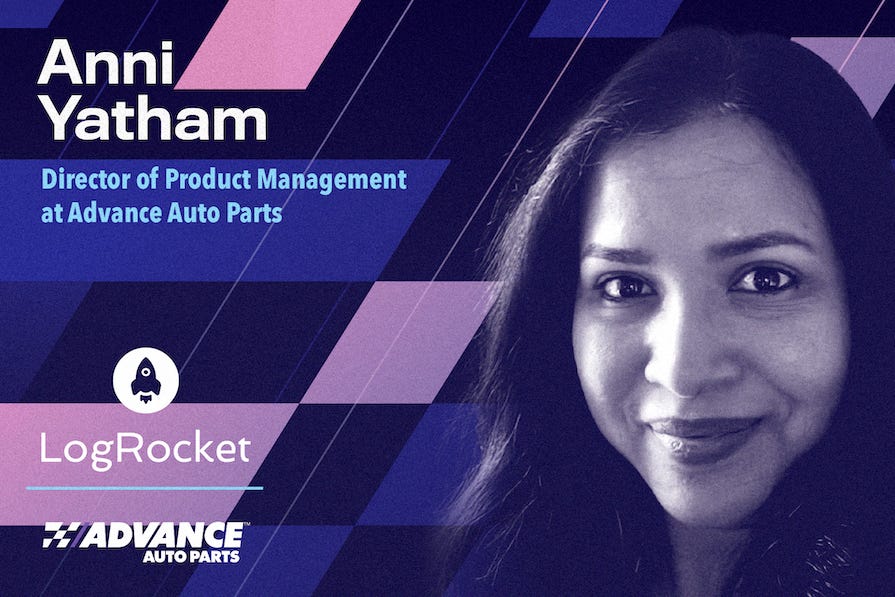
In our conversation, Anni shares how she reframes digital initiatives as revenue stories, not just feature roadmaps. She explains how to develop the right hypothesis, test the market without getting overly committed to a solution, anchor product conversations in margin and P&L impact, and recognize when a pilot is truly scalable. She also discusses the cultural conditions required inside large enterprises for innovation to generate durable growth and why product leaders must resist the urge to simply build.
Starting with the problem, not the solution
Throughout your career, you’ve turned digital initiatives into clear revenue stories. What’s the first question you insist your team answer before building a roadmap?
There’s an old saying that a well-defined problem is half solved. Once you’re clear on the problem, the direction starts to reveal itself. Early on, though, things aren’t always perfectly defined. Sometimes what looks like a problem is really just noise, so part of the job is separating real signals from assumptions.
For example, a few years ago we were developing an IoT solution when the market was heavily leaning toward subscription-based models — similar to how devices like the Apple Watch combine hardware, embedded software, and recurring services. As a manufacturer, we believed a subscription model could open a strong new revenue stream for us, so we formed that initial hypothesis and tested it with customers.
The feedback was clear: customers liked the solution, but they weren’t willing to pay even a small subscription fee. Instead of forcing the original model, we pivoted. We offered the solution at no cost, but in return gained access to anonymized usage data. That data allowed us to optimize our broader ecosystem, improve product performance, and ultimately create value in other revenue-generating areas.
So the key lesson for me is this: start with the problem, develop a hypothesis, test it quickly in the market, and stay flexible. The biggest mistake teams make is falling in love with the solution too early. If you stay committed to the problem instead, you’ll almost always find a path to real business value.
Building a culture that allows you to pivot
In parallel with testing, how important is stakeholder alignment inside a large enterprise?
It’s absolutely critical. In a large enterprise, you’re not operating as a standalone entrepreneur — you’re working within an interconnected system, so progress depends heavily on alignment.
That’s why I say culture matters. You need an environment that supports testing, learning, and pivoting — one that allows teams to experiment, invest, sometimes fail, and then try again without penalty. When stakeholders share that mindset, innovation moves much faster and with far less friction. In my experience, that combination of leadership alignment and a test-and-learn culture is what really enables teams to succeed at scale.
Reframing digital from cost center to revenue enabler
Many enterprises still frame digital as a cost-saving lever. How do you get executives to see it as more than just efficiency?
Across my career in marketing, digital, and IT, one recurring challenge has been the tendency to frame technology teams purely as cost centers; as overhead required to run the business rather than as strategic enablers.
Now, it’s perfectly fine if digital isn’t always a standalone revenue engine. In many industries, especially manufacturing, the core product is still physical. But the real opportunity is to position digital capabilities in terms of the business outcomes they enable. A simple way to do that is to ask: What happens if this capability doesn’t exist? Does revenue drop? Does customer experience suffer? Does the brand take a hit?
Once you translate those impacts into revenue, margin, or P&L terms, the conversation changes. Now you’re able to say, “This is a partnership. We’re going to create digital capabilities that are going to help the business run better, run efficiently, run smoother — but it’s all anchored in revenue.”
That mindset shift is what gives technology teams a true seat at the table.
Testing early to build credibility
Can you share an example of creating a revenue story that was credible to executives early on?
Several years ago, online purchasing was quickly becoming the norm. Companies like Carvana were already proving that customers were willing to buy even big-ticket items online, and globally we were seeing markets — especially in Asia — move even faster. In places like China and Japan, brands weren’t just selling online; they were selling directly through social platforms such as WhatsApp, where customers could discover, order, and pay within the same channel.
When we assessed where we stood, it was clear we were a few steps behind, so we focused on catching up quickly. We piloted a small-scale digital commerce initiative with a handful of partners and started seeing incremental revenue almost immediately. Customers who “never knew we existed now knew that we were out there,” and we also began to shift the perception that our brand was “premium and unaffordable” to one that was accessible and on par price wise with other brands.
That gave us a credible executive story. We were able to go back to stakeholders and say, “Here’s the revenue generated in just one year, and this revenue wouldn’t have existed if the platform hadn’t been in place because these customers didn’t even know us.” Once leaders could clearly see the implemented revenue tied directly to the capability, scaling the model to other regions became a much easier decision.
Partnerships as accelerators
Where have partnerships helped you turn internal innovation into scalable revenue faster than you could have alone?
Large companies naturally tend to move slower. There’s governance, bureaucracy, and some level of “red tape,” and much of that exists for the right reasons — you want to protect the core business and avoid unnecessary risk. But partnerships can create the kind of ecosystem where new technology has room to thrive and grow much faster than it could internally.
In one instance, we had developed a strong homegrown virtual software solution that we believed could eventually evolve into a digital twin capability. The core technology was solid, but we didn’t yet have the internal resources to build the advanced analytics engine needed to fully unlock its value. By forming the right partnership, we created an avenue for the solution to mature into something with real commercial potential, ultimately opening up a new revenue stream for the company while also creating value for our partner.
We called those “triple wins.” The company benefits, the partner benefits, and customers receive a more advanced solution. When you build that kind of ecosystem, innovation doesn’t just move forward — it scales, and everything thrives and grows.
When a pilot is truly scalable
How do you know when something is scalable and not just a successful pilot?
The first step is simple: talk to the customers. Customer insights are incredibly valuable because they tell you whether the solution is solving a real, repeatable problem — or just performing well in a controlled pilot. And the second step is just as important: book some sales.
In one situation, we considered partnering with a startup but ultimately decided to bring the capability in-house and build the product ourselves. Once we launched it, we took it directly to market and secured actual customer sales. At that point, we had both the insights and the revenue signals, and that told us we were already halfway there in proving scalability.
Another key lesson is not to over-engineer too early. Even in its early, nascent form — without all the bells and whistles — if the product can demonstrate real value through paying customers, you now have the confidence to scale and invest further. Then you can say, “OK, now I know I can add additional features and unlock even more value from this product.”
Ultimately, scalability comes down to financial proof points. You don’t want to launch something overly complex or expensive only to discover it doesn’t generate revenue. The commercial dynamics have to work first; once they do, scaling becomes a much more predictable decision.
What challenges are often underestimated in early testing?
Building the technology is certainly difficult, and often expensive, but the really hard part is changing customer behavior. Humans are creatures of habit. We tend to stick with what we already know, even when it’s inefficient, because over time we create workarounds and mental shortcuts that become part of how we operate every day. We don’t always look for new ways to solve those problems.
That’s why, when you’re launching new products — especially ones customers directly interact with — it’s critical to design experiences that are truly intuitive. If a solution isn’t easy to understand and use, adoption simply won’t happen. And if adoption doesn’t happen, revenue doesn’t happen. This is where design thinking becomes so important in the digital world: the goal is to create products that feel natural from the very first interaction.
Another challenge comes after the pilot phase. Launching something once is one thing; operationalizing recurring revenue is much harder. Inside large organizations, you have to work within established processes while still operating in a lean, agile way. If the new offering inherits too much organizational overhead, the economics quickly become difficult to sustain.
So success isn’t just about building the right technology — it’s about driving behavior change through intuitive design and ensuring the operating model can support scalable, recurring revenue over time.
Knowing when not to build
How do you decide whether to expand a product with more features or keep it tightly scoped?
In the product world, one thing we try to do consistently is anchor everything in business value. Upfront, we establish the margin and revenue potential the project can realistically deliver. Then, for every incremental feature, we ask: What does this cost, and what’s the return? How does that value actually show up on the P&L?
There’s always a trade-off conversation with stakeholders. People naturally gravitate toward the “shiny new object.” New platforms and added functionality are exciting. But before adding all the bells and whistles, we pause and ask, How is this feature going to generate value? If we can’t clearly tie it back to revenue, margin, or a defined business outcome, it’s probably not the right investment — at least not yet.
It takes discipline. It’s much easier to build something new and launch it than it is to continually pressure-test whether each enhancement drives measurable impact. That’s why ongoing iteration, tough value conversations, and strong OKRs are so important — they keep the product anchored in outcomes, not just output.
If you were advising a product leader trying to create a new revenue story inside a legacy enterprise, what would you tell them to stop doing?
There’s a good book called Escaping the Build Trap, and the core idea resonates deeply: product teams love to build. We’re wired to create. So my advice would actually be — stop building, at least for a moment.
Instead, start with business value and growth. Especially now, with generative AI accelerating development cycles, you can build faster and cheaper than ever before. But speed doesn’t matter if you’re building the wrong thing.
Anchor everything in three questions: Does the customer truly want it? Will the business benefit from it? And how does it measurably help the company grow?
Building will come. The real discipline is making sure you’re building the right thing.
One approach I’ve found very effective is running structured workshops with business leaders to guide how the conversation happens. There are many frameworks you can use, but I lean heavily on design thinking because it helps break decisions into three simple dimensions: desirability, feasibility, and viability.
Desirability: Do customers actually want this?
Feasibility: Can we build it — do we have the infrastructure, talent, and resources?
Viability: Can we make money from it?
When those three intersect, that’s the real value stream — that’s what you want to focus on.
How do you make stakeholder conversations more productive?
Often, stakeholders come in trying to prescribe the technology. They’ll say, “Build this platform and make it work exactly like this.” But when you shift the conversation and ask, “Help me understand what problem we’re trying to solve, who we’re solving it for, and why this capability matters,” you begin to uncover the real underlying needs.
Using a simple framework like this keeps discussions grounded in outcomes. It moves the conversation away from features and toward value, which ultimately makes stakeholder alignment much more productive.
Bringing a business lens to product leadership
How has your unconventional career path shaped the way you think about leading product teams?
I have a non-traditional product background. I started out in IT as a Six Sigma Black Belt and later moved into an innovation accelerator, where the focus was on core and adjacent innovation and developing go-to-market strategies. The goal was always the same: stay lean while driving top-line growth or improving the bottom line.
Those experiences and frameworks really shaped how I think about product and technology. It’s never just about building something — it’s about creating value and ensuring what you build makes a measurable impact. That’s why I love product management so much — it sits at the intersection of strategy, innovation, and execution, and it’s all about driving real business results.
What does LogRocket do?
LogRocket’s Galileo AI watches user sessions for you and surfaces the technical and usability issues holding back your web and mobile apps. Understand where your users are struggling by trying it for free at LogRocket.com.