

Alyssa Zeisler is General Manager of Beacon, a streaming service by Critical Role. Before that, she was Vice President of Product Management at Hallmark Media, a company that operates Hallmark Channel, Hallmark Mystery, and Hallmark Family, as well as the Hallmark+ subscription streaming service. Prior to joining Hallmark Media, she worked in various roles at Dow Jones, including Research & Development Chief of the Wall Street Journal,and VP of Product Management, Subscription Products and Strategic Initiatives.
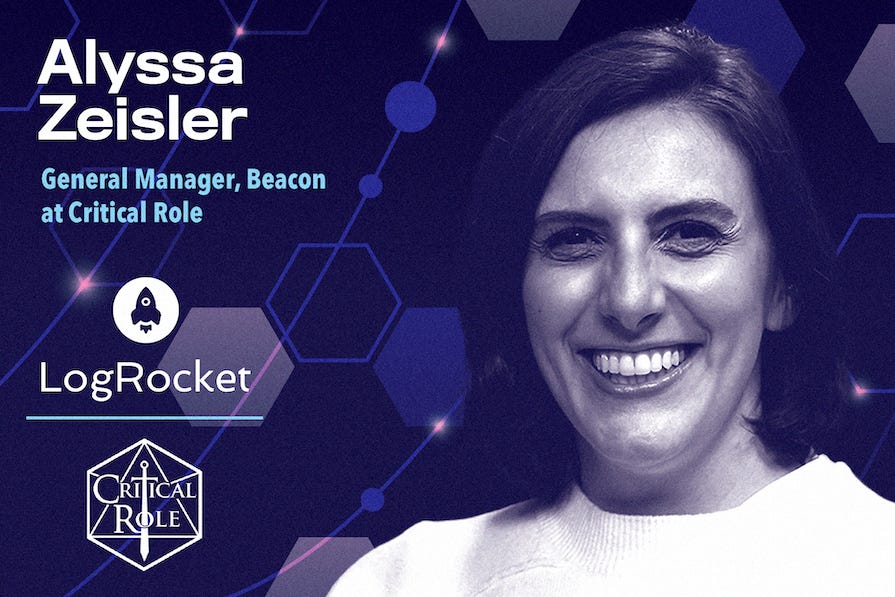
In our conversation, Alyssa talks about her leadership approach, which is driven by her Four C’s Framework — context, clarity, coaching, and consistency — and how it builds sustainable team performance. She discusses how she identifies and develops emerging leaders through visibility, intentional coaching, and real management opportunities. Alyssa also shares how she leads with empathy during periods of reorganizations and burnout.
Converting potential into organizational impact
To start, could you talk about your approach to leadership and how it informs the way you work with your teams?
Looking back on my experience, the throughline in how I lead comes down to what I’ve named my Four C’s Framework — context, clarity, coaching, and consistency.
The first C is context, which is all about grounding teams in the “why.” These are the business objectives, user needs, and market realities that shape every product decision. Without context, even talented teams can’t prioritize effectively.
Next is clarity, which is about defining what success looks like: expectations, outcomes, and ownership. It removes ambiguity so teams can focus on impact instead of interpretation. It’s also about ensuring teams know how their work ladders up to measurable outcomes.
Coaching is where leadership scales. I don’t want to just give answers, so I try to ask questions that help people develop judgment, confidence, and expertise. Last is consistency, which is what turns those ideas into culture. This is about showing up the same way in all situations, including reviews, 1:1s, highs, and lows, so that people know what to expect and feel supported over time.
This framework has guided me through very different environments and keeps me anchored in both performance and people.
You mentioned that coaching specifically scales leadership. One important component of creating a culture of growth is to identify and nurture emerging leaders. Can you talk about your method for that?
Emerging leaders are often the ones who volunteer for ambiguous problems, ask the right “why” questions, and elevate their peers. In many instances, those individuals will naturally make themselves known through their work and actions. With that said, converting that potential into organizational impact requires intentionality. I take a three-step approach.
First, I create visibility for them. Things like stretch projects and cross-functional working groups are all great opportunities. Second is coaching — it’s one thing to put people in those spaces, but it’s another to support them through it. Specifically, I invest in holding coaching conversations that are focused on growing their impact.
With coaching, it’s important to empower these folks to make the decisions, give them the right context, and help them through it, while also creating psychological safety. You have to be careful to make sure your high performers don’t feel they need to do everything themselves.
Third is creating management opportunities. Getting this experience is one of the hardest steps for young leaders — and even more so for women and people of color, who often face disproportionate scrutiny or lack access to these opportunities. I’ll often work with my team to offer experiences to build that skill, whether it’s leading a project or perhaps managing an intern for the first time.
To give an example of what this looks like in practice, at Hallmark, I had a project manager who was interested in product management. She was a high performer who would often come up with ideas outside of her own remit, specifically that she thought had potential for the business.
When the opportunity came up to own a major body of work, I made sure she was set up for success, and when a role opened up on the product side of the team, we were able to transition her to that new position. Right out of the gate, she successfully led an impactful feature launch.
Creating scalability across an organization
At both Hallmark Media and Dow Jones, you inherited teams operating at different levels of maturity. What was your approach to quickly determine whether a team needed structure, autonomy, or new expertise?
I always try to listen and diagnose first and foremost. I listen to the team and their stakeholders to understand where individual strengths and interests align with the business’s needs. What’s working in the team, where are opportunities for efficiencies, what’s not working, what projects might have blockers, etc.? All of these questions help me get a sense of what’s working — both functionally across the team and for the individuals — right when I come in.
For example, at Dow Jones, I inherited a six-person team immediately after a reorganization.
People were demoralized and unsure of their roles. I spent my first 30 days rebuilding trust through 1:1 conversations with every team member, mapping their motivations, and identifying where they saw opportunities. Then, I introduced a clearer strategy, defined success metrics, and made decision-making more transparent. Within a quarter, both morale and team velocity noticeably improved.
At Hallmark, though, the challenge was different. Scaling the team meant evolving from an “all hands on deck” launch model to a subject matter expert one. I wanted to help give people clearer ownership and greater empowerment. That all started with listening, identifying where teams and stakeholders felt the biggest gaps, and aligning structure and new roles to business goals. I don’t take for granted the ability to add headcount, so always make sure there is a clear need and business case before moving in that direction.
When working with an org that is scaling quickly, are there certain practices you rely on to help create a sense of ownership and a culture of continuous learning?
Creating a strong infrastructure for a team is really important because if you’re not intentional, you can fragment teams. I think about creating scalability through strong foundations, leadership, and clear KPIs. Foundations are things like establishing clear, repeatable processes and systems that the team can rely on. Even something as simple as a clear PRD format can make a huge difference in enabling alignment and efficiency.
Also, hiring and developing the right people is crucial to growth. Depending on the team’s lifecycle, you will need different types of hires, but at an early stage, I like to prioritize hiring versatile talent. These are people who thrive in ambiguity, can remain impactful in different contexts, and, in particular, will either fit or add to the culture. I try to determine their communication style, their ability to learn, their approach to collaboration, etc., because those traits will determine long-term resilience.
It’s also important to mention that maintaining focus when you’re growing is crucial. Teams can often get distracted, so things like regular KPI reviews, ensuring a clear understanding of the market, and other things like that help teams adapt to the reality of where they are and sustain the momentum.
At Dow Jones, you led teams that built AI-powered personalization and pricing models. How did you upskill teams or instill confidence in those working with AI for the first time?
I actually co-led a class at Dow Jones about finding AI opportunities, and in general, education is really important when you’re looking at incorporating AI across the broader org. My approach was to focus on demystifying AI and connecting it to meaningful use cases. For example, with generative content, it was important to show reporters that AI could automate the more routine aspects of their work, which would free them to focus on deeper reporting and analysis. It also opened up entirely new kinds of investigation that wouldn’t have been possible just a few years earlier. Once people saw those possibilities and we had a few early wins, adoption accelerated pretty quickly.
Like any technology challenge, it starts with understanding the problem before jumping to a solution. The “black box” nature of AI can feel intimidating, so transparency about how models work and where they’re most effective helped build trust. During the class I co-led, we started with a meme about how AI is essentially just math underneath all of its layers and interfaces.
Helping people understand the basis of what it is and where those opportunities are was fundamentally important.
I’d also emphasize the importance of finding evangelists, who are people interested in working with the technology and who are open to experimentation, and finally, I always make sure to create psychological safety. When people feel comfortable asking questions and admitting what they don’t know, they’re much more likely to engage with new technology and build confidence through experience.
What it means to ‘lead by example’
Many leaders talk about leading by example, but that can look very different at the VP level. What did that mean in practice for you at Dow Jones when you integrated R&D and newsroom teams with different cultures?
As a leader in those contexts, the best thing you can do is listen and help translate. When you have two different teams that don’t speak the same language or use the same terminology, friction can build fairly fast.
Of course, I didn’t expect the newsroom to adopt product language or the data science team to grasp editorial nuance overnight, but it was important that I showed up in those places and helped translate between the groups until they could do so themselves. In this case, “leading by example” isn’t necessarily about doing the work, but enabling different experts to collaborate.
You’ve led through intense moments — from newsroom restructures to broader media shifts. What’s something you learned about leading with empathy that you didn’t fully appreciate until after going through layoffs or reorganizations firsthand?
Early in my career, after a reorg, I tried to be positive, but I didn’t fully realize that people don’t want cheerleading after their teammates lose their jobs. They want honesty about what’s sustainable and what’s not because with layoffs, ambiguity is the scariest thing. People don’t know if more rounds of layoffs are ahead and if they’ll be affected. And you often can’t answer those questions, so being empathetic is really important.
I also struggled a lot with survivor’s guilt. I’ve since learned to be really careful not to center yourself in that conversation. As a team leader, after RIFs, it’s first important to focus on a few things with the teams and individuals that remain. People need to hear leadership say clearly, “Here’s what we’re still building, here’s why it matters, and here’s how your role connects to that.” Leftover ambiguity after layoffs can create toxic cultures.
Second, I create space for people to process change. The idea is not to slow momentum, of course, but to re-anchor them in what’s next. Lastly, I redistribute work thoughtfully. What do we stop, defer, or simplify? This also helps to clarify expectations and ensure ongoing accountability. Overall, if you’re approaching the situation with empathy, listening to people, and trying to massage the work, that can help move people forward.
When teams are anxious or burned out, what signals tell you it’s time to slow down or reprioritize?
Our understanding of burnout has changed over the last few years. Not to minimize burnout resulting from just too much work, which is a real thing, but academics have been able to bring in nuance as well. We’ve learned that burnout can result from psychological dissonance in the workplace. People feel they aren’t working on something meaningful, or being pulled in too many directions, etc. Sometimes, what people need isn’t less work but more meaning.
However, sometimes people may be too deep in the weeds to be thinking about it like this, so I watch for early signals as well. I look for other cues, like if they’re messaging at 11 p.m. regularly, for example. Has their behavior shifted meaningfully, like being less vocal in meetings, for instance? When teams stop debating or volunteering ideas in meetings, it can often be a sign they’re in survival mode. If that happens, we revisit goals, drop or defer work that’s not mission-critical, and reconnect the team to the most important work.
Generally, I like to ask people in a 1:1 how they’re doing. Are they feeling overwhelmed? Are they feeling like they’re working on the right things? I trust them to tell me when they’re feeling overwhelmed, burnt out, or if they don’t feel they are working on value-added projects. If the tone is more that they don’t believe in this work anymore, it leads me to figure out if it’s because the work has drifted away from the strategy and the vision. If so, we need to course-correct or evaluate if this is potentially not the right fit anymore.
In other cases, I appreciate it when my team members say, “Hey, I’ve actually just been working too hard.” I’ll say, “Great, go on a vacation.” There are a lot of things that people need to do to recalibrate, and I’m a proponent of making those things available.
What does LogRocket do?
LogRocket’s Galileo AI watches user sessions for you and surfaces the technical and usability issues holding back your web and mobile apps. Understand where your users are struggling by trying it for free at LogRocket.com.